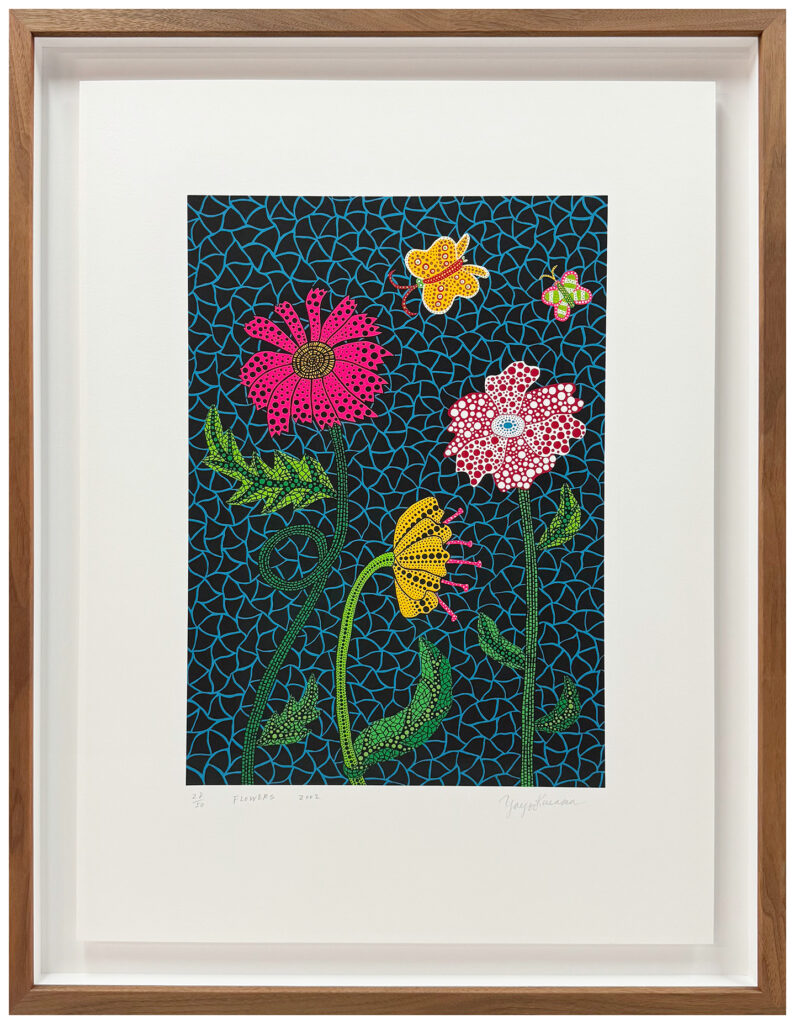
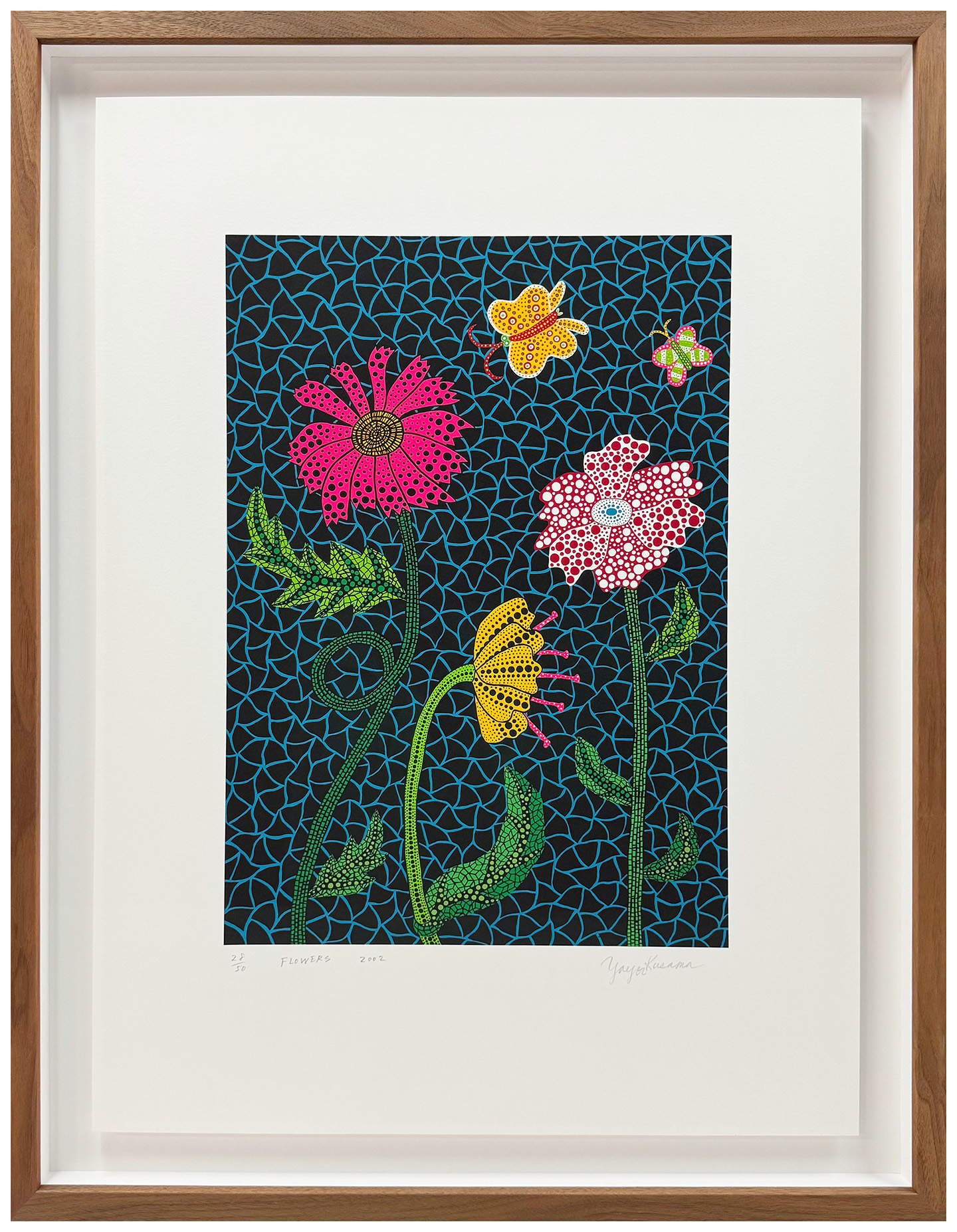
The art world suffered a major loss in August when Yayoi Kusama passed away at the age of 97. One of the most important artists to have come out of Japan, Kusama was known for creating art through a variety of mediums including painting, drawing, sculpture, installation art, performance art, film, fashion, and writing among others. She was trained at the Kyoto City University of Arts in a Japanese painting style called nihonga – a style of painting that uses mineral pigments and ink on silk or paper. She was also deeply influenced by abstract impressionism, moving to New York City in 1954 to become a part of the avant-garde art scene that was blossoming at the time. Her art would go on to influence artists like Andy Warhol, Claes Oldenburg, Barbara Takenaga, and Donald Judd to name a few. Kusama’s repetitive use of polka dots, infinity mirror rooms, and bright colors make her pieces some of the most infamous and recognizable in the art world – and we were lucky enough to recently frame a signed print of Kusama’s “Flowers” from 2002.
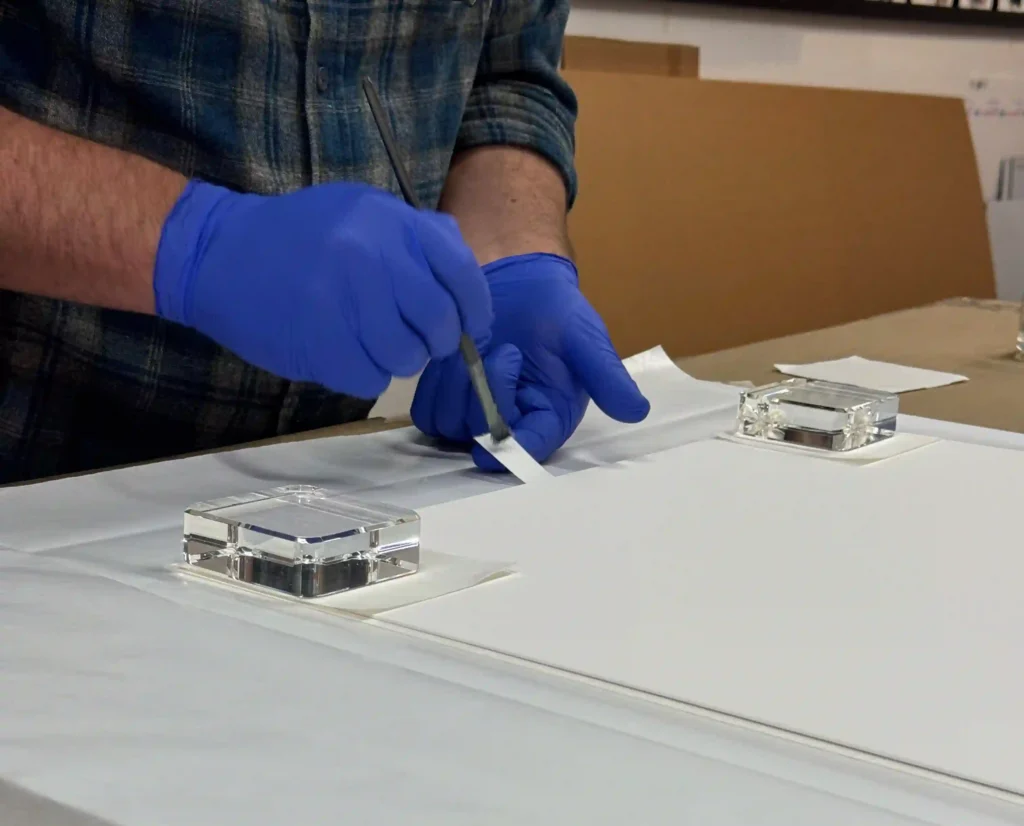
The client wanted a double museum float for the print, keeping the matting neutral to draw the eye towards the vibrant colors without distracting from the piece in any way. We started by hinging the print using mulberry paper and Klucel G, a conservation grade alcohol reactive adhesive that adheres to art without causing the rippling, cockling, or warping that water based adhesives are susceptible to.
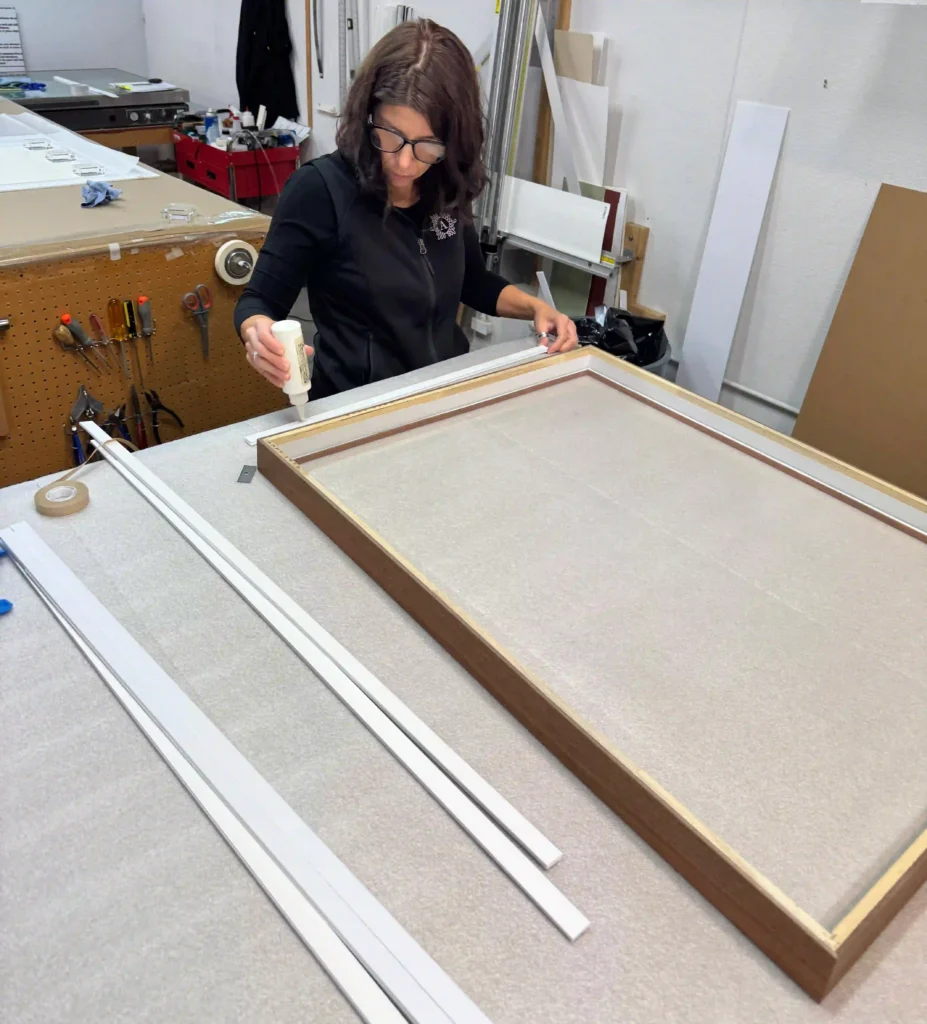
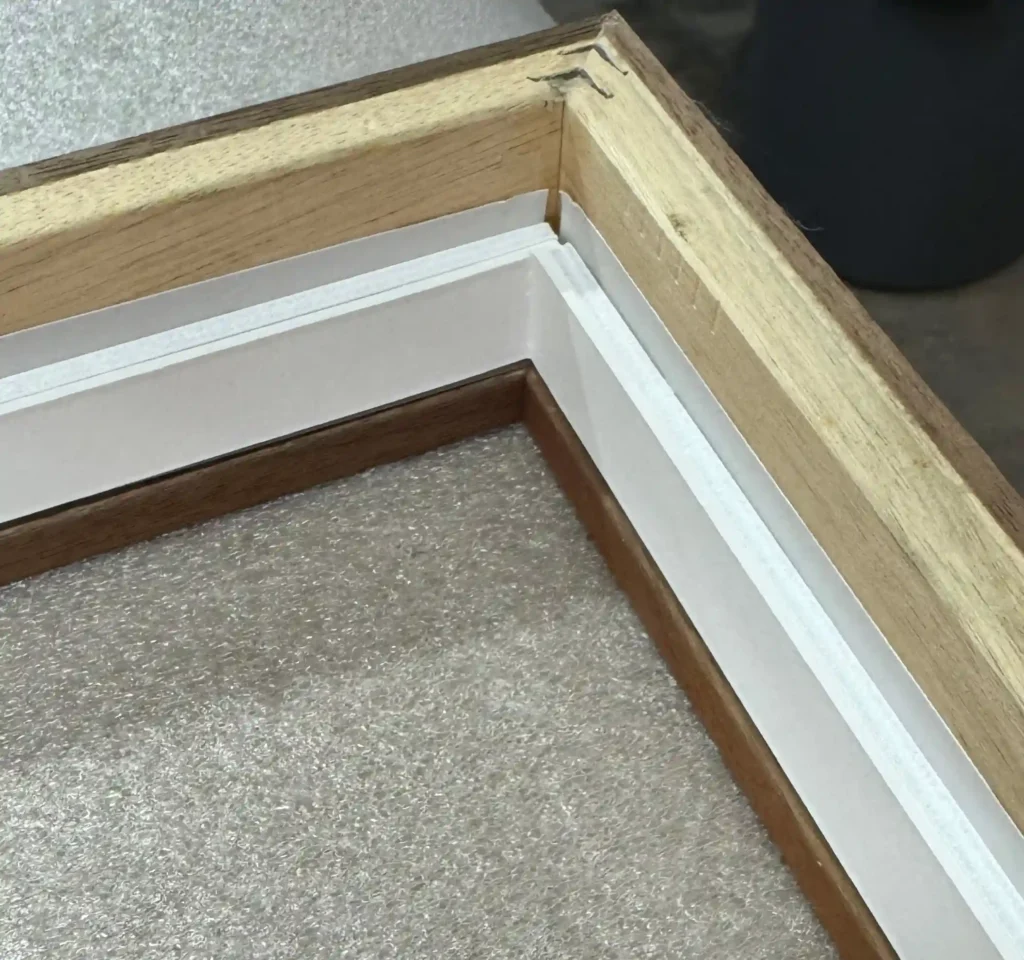
Since this piece would be floated, we first needed to cut the Optium Museum Acrylic for the face of the package. Optium Museum Acrylic is 99% UV protectant in addition to being anti-reflective, anti-static, abrasion resistant, and shatter-proof making it the best choice for this (or any) high value piece. Once the acrylic was placed in the frame, we created the build up in the frame using acid-free foam core and pieces of mat board that were identical to the mat the piece would be floated on.
Detail of Shadow Box Build with Mat Board and Foam Core
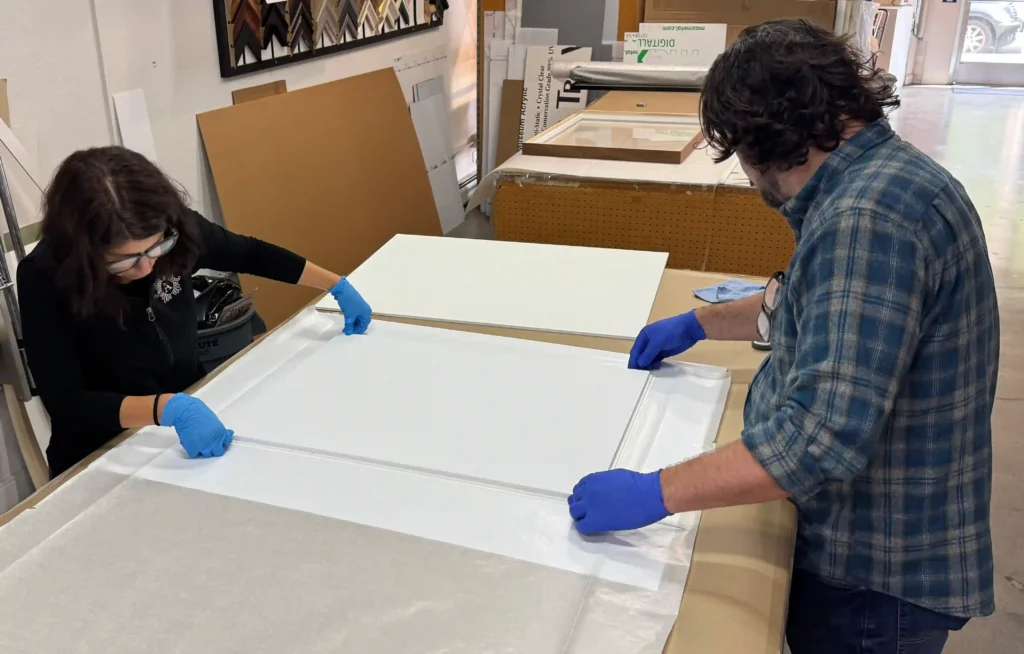
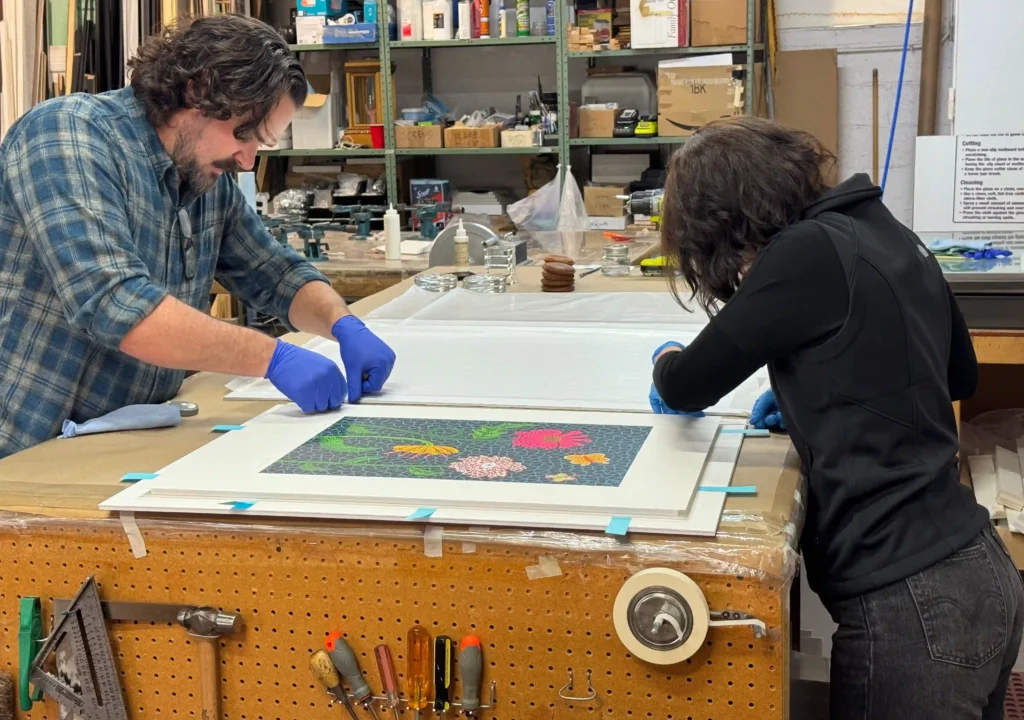
After the hinges dried, it was time to make the print “float.” The first step to float the piece was to secure the print via its hinges to a 4ply sheet of Museum cotton rag mat slightly smaller than the art. While those dried, we adhered two pieces of acid-free foam core together using PVA glue (an archival adhesive that is also acid-free) to raise the print up from the mat. We then adhered this double stacked foam core to the thin foam core the print was hinged to, creating its “float pedestal.” The inside of the frame was lined with a metallic barrier tape to prevent acid damage. Spacers were then created to line the inside of the frame using the same matting and acid free foamcore that the art was mounted in-order to create the space needed so the Museum Optium Acrylic did not contact the art. We only use conservation-grade materials and techniques in our Englewood, CO shop, so this print could be removed from the float at any time without causing damage to the print.
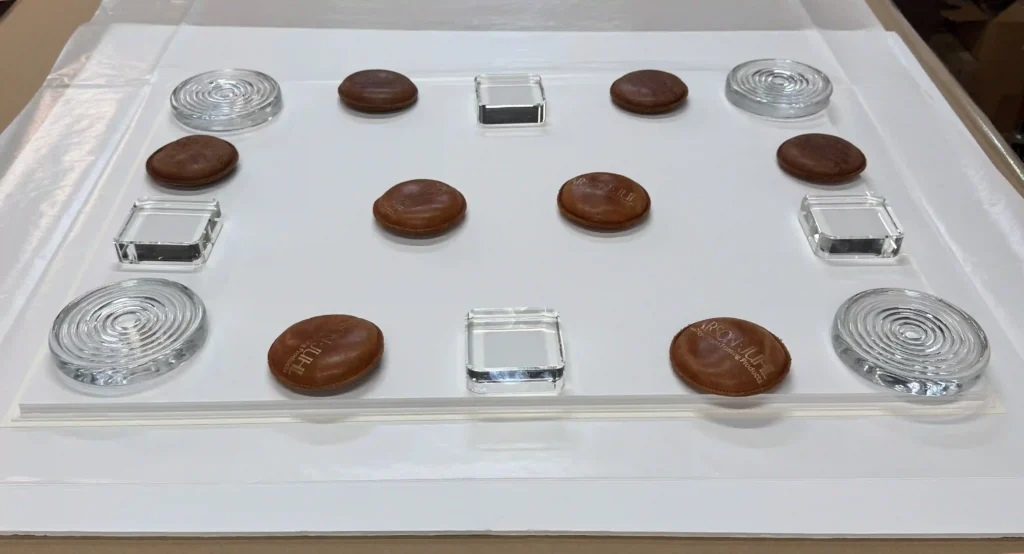
From there, it was time to adhere the float to the mat board backing. Using the same PVA glue we used to make the double museum raised float, the piece was carefully placed onto the backing. We used paper to mark the mat margins, ensuring the print was evenly spaced directly in the middle of the frame.
After the float was dried and securely attached to the mat board, it was time to put the entire package together. We secured the print using the traditional framers points, and then added a layer of metal barrier tape around the edges for extra protection from the elements. We love the way the art is now presented and most importantly, the client does too.